I spent three days at MSPO, Poland's International Defence Industry Exhibition and the third largest defence show in Europe after Eurosatory and DSEI. This year was the biggest edition in its history: over 1,200 exhibitors from 43 countries and roughly 45,000 visitors. I went with one job: understand what the Polish and European buyers of unmanned systems actually want, and bring that back to the Taiwanese manufacturers I work with. Here is the report. Lessons first, then highlights and who I met, then a short round-up of what the press covered.
Part 1. What I learned
1. Drones are everywhere. Finished drones are not.
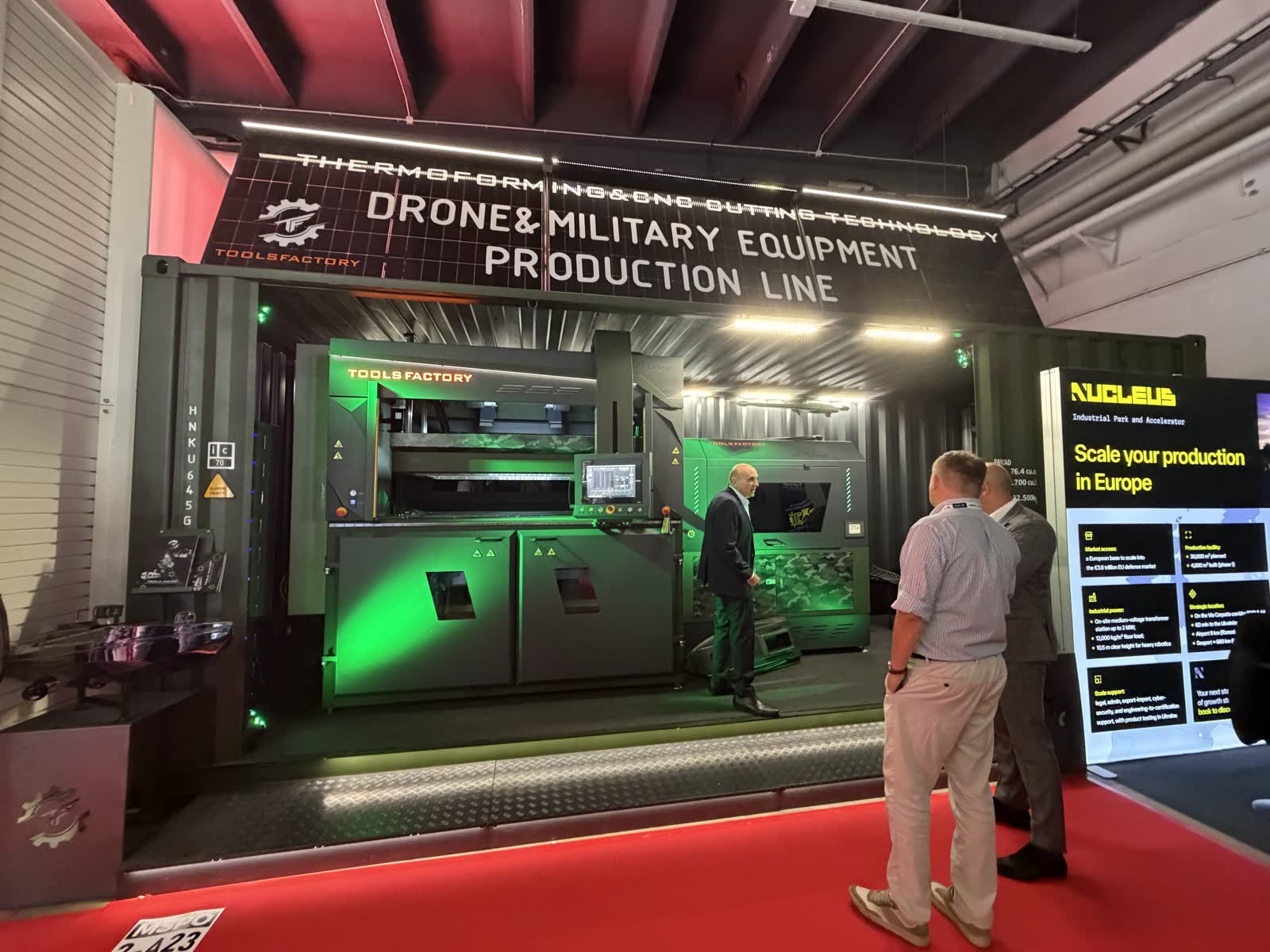
In some halls it felt like every second booth had a drone, or something built to stop one: airframes, interceptors, radars, jammers, AI targeting software, thermal cameras, batteries, motors, datalinks. The whole supply chain was on the floor, from the primes down to a single 3D printed frame on a folding table. One exhibitor was not even selling drones but a containerised production line to make them.
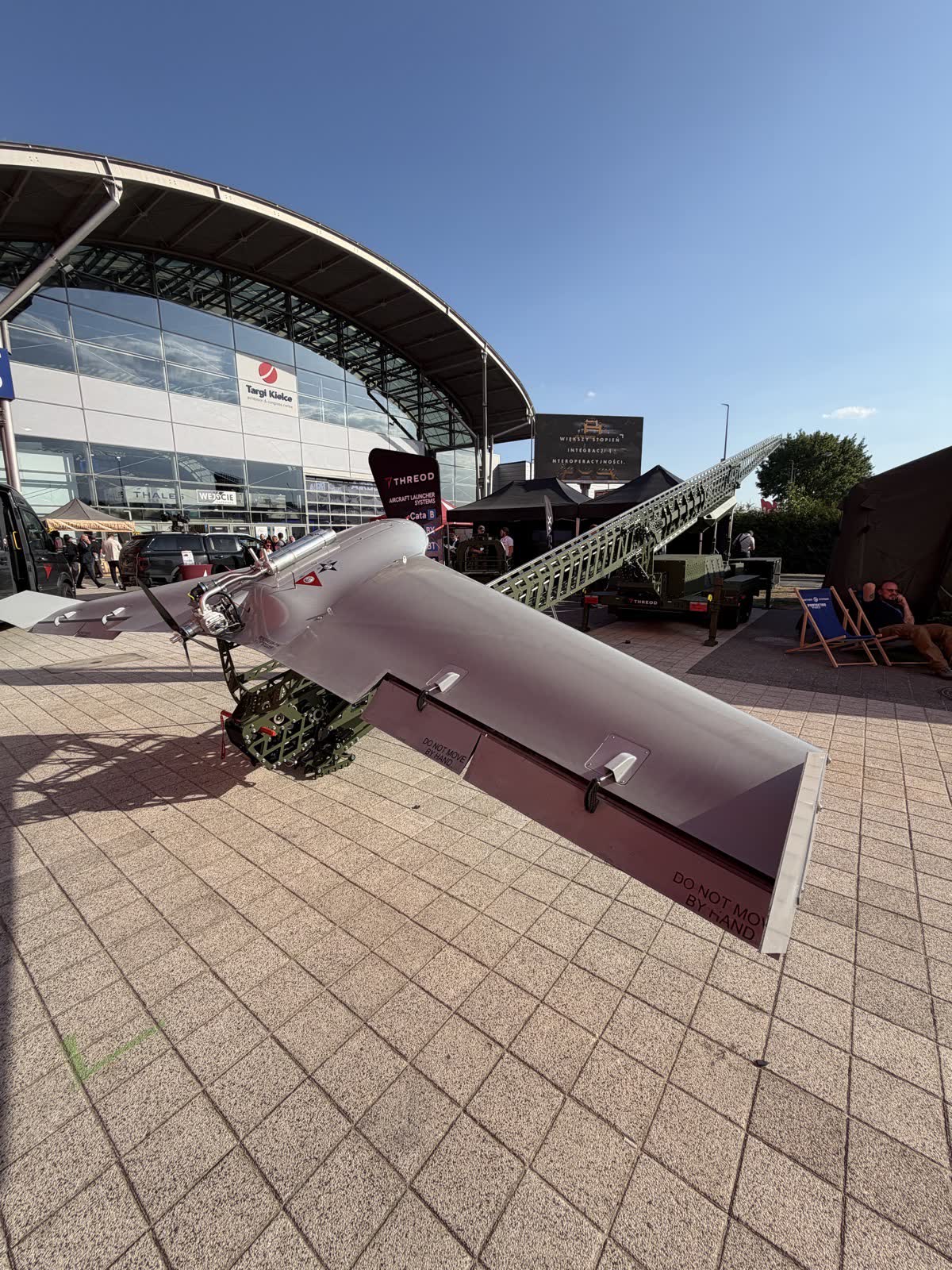
But on closer questioning, and sometimes just by standing next to a booth and listening, a lot of what was shown was still a prototype. "In testing." "First customer trials in Q1." "We're finalising the airframe." The gap between what was on the plinth and what could ship next month was wide, and the buyers I spoke to knew it. Every one of them has been burned by a demo that never became a delivery. It shaped every other conversation I had.
2. Demand is real, and penetration is still shallow
I sat down with several of the top distributors and resellers who sell unmanned systems to the Polish military and to other armies in the region. The message was remarkably consistent. Yes, Poland and the other countries close to the frontline are already fielding a lot of drone solutions. And no, the market is nowhere near saturated.
"The penetration into the different parts of the military is still very shallow."
That line, or a version of it, came up in three separate meetings. Drones have reached the specialist units first. The plan now is to push them much deeper: into regular infantry, logistics, engineering, territorial defence, border guard and police. Each of those is a new buyer with a new budget line. For a manufacturer, that means the window is still open. For a distributor, it means they are actively looking for suppliers who can fill a catalogue, not just one hero product.
3. What is in high demand: ISR and interceptors, and for interceptors it is all about speed
When I asked "what do you need most right now", two categories were at the top of every list.
- ISR drones. Reliable reconnaissance platforms, both multirotor and fixed-wing VTOL, in several size classes, with good optics and a datalink that survives jamming. Not glamorous. Ordered in volume.
- Interceptor drones. This is where the energy was. Russia is building faster and faster one-way attack drones, and the newest Shahed variants are jet-powered. Ukrainian companies at the show said the older interceptors that were hitting around 90 percent of propeller Shaheds simply cannot catch the jet versions, so the whole interceptor category is now a race for speed. Ukrainian teams talked about kinetic-boosted interceptors reaching around 450 km/h and jet-powered interceptors targeting 500 to 700 km/h, with deployment planned for this autumn. One Polish distributor put his floor at "300 km/h plus, and proven".
A lesson for anyone in R&D, especially in Taiwan: do not design for today's threat. By the time your interceptor is qualified, the target will be faster again. Think about what comes next. Perhaps even faster drones, cheaper mass, and the counter to that. The teams that impressed buyers were the ones already talking about the version after the one on display.
4. Two notes for the Taiwan companies I work with
Several Polish distributors have already tried working with Taiwanese manufacturers. Most were positive about the technology and about the non-China supply chain story, which resonates strongly here. But two frustrations came up more than once, and I promised I would pass them on honestly.
- Product maturity. Resellers are there to resell. They are not your test department. If a product arrives and the firmware still needs work, or the flight envelope has not been proven in cold, wet Central European weather, the distributor's reputation with the army takes the hit, not yours. Bring finished products, with flight hours, documentation and spares behind them. If it is still a prototype, say so, and offer a trial, not a sale.
- Start small, then go big. Nobody here will commit to a large purchase on the first order. The pattern that works is a small batch, a field evaluation, a second batch, and then scale. Distributors told me that Taiwanese suppliers sometimes want a big minimum order up front, or price the small batch as if it were a favour. The reverse is true: the small batch is the sales pitch. Price it to win the trial, and the volume follows.
Neither point is unique to Taiwan, but Taiwan is new in this market and is being compared, fairly or not, with Ukrainian companies who ship battle-tested hardware in weeks. Maturity and flexibility are how you close that gap.
5. One more note for the Taiwan delegation: study Korea
The Korean presence at MSPO was a masterclass. It was not one booth but a whole section with multiple companies, Hanwha and LIG among them, and walking into it felt like entering a theme park. Consistent design language, shared lighting and signage, big screens, animated terrain tables with models moving across them, staff who guided you from one company to the next as if it were one story.
They even had a gigantic display that recognised a Polish or other NATO VIP as they approached the area and put their photo and name on the screen, in Polish, before they had reached the first stand. I watched it greet a Polish Armed Forces commander. The general stopped. Everyone around him stopped. That is what a booth is for.
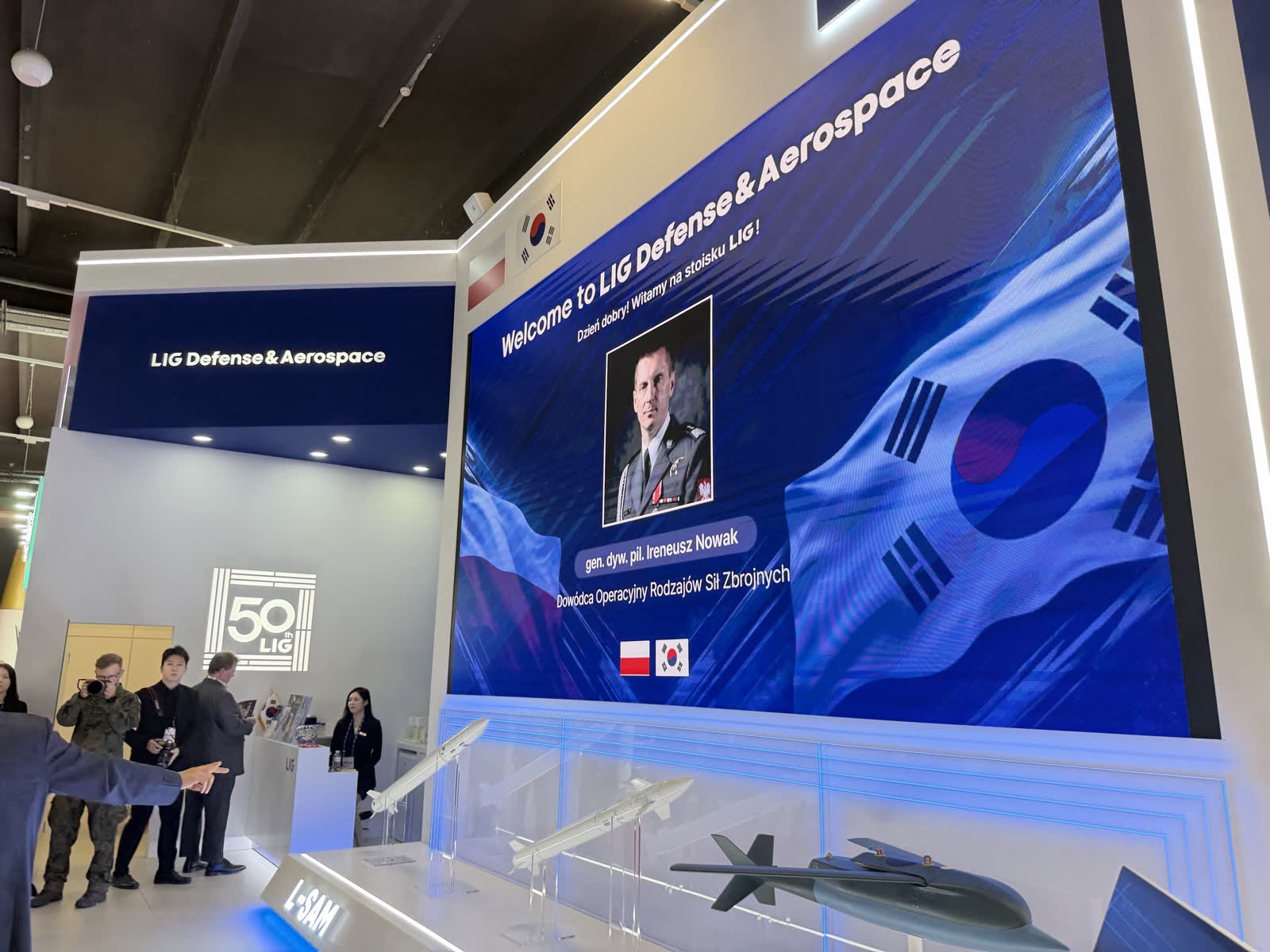
Although the Korean area had many different companies, it read as one cohesive national offer, designed to work together. Korea is also the country that turned MSPO into a K9 and K2 export pipeline worth billions to Poland. That is not a coincidence. Taiwan's pavilion had good products and good people. But the presentation layer, the thing that makes a general stop walking, is where Korea is years ahead. It is fixable, and it is worth fixing before the next show.
Part 2. Highlights and who I met
Three days, a few dozen conversations, and a phone full of business cards. A selection, roughly in order of how much they will matter for the Taiwan side.
- Polish and regional distributors of unmanned systems. Sit-down meetings with the leadership of several of the top resellers to the Polish armed forces, including Uniforce (Poznań), which distributes Orqa, Atlas Aerospace and Skydio in Poland and had one of the busiest stands, right opposite the main entrance. This is where the "ISR and fast interceptors, proven, small batch first" message came from. Several are now waiting for a Taiwan supplier shortlist from me.
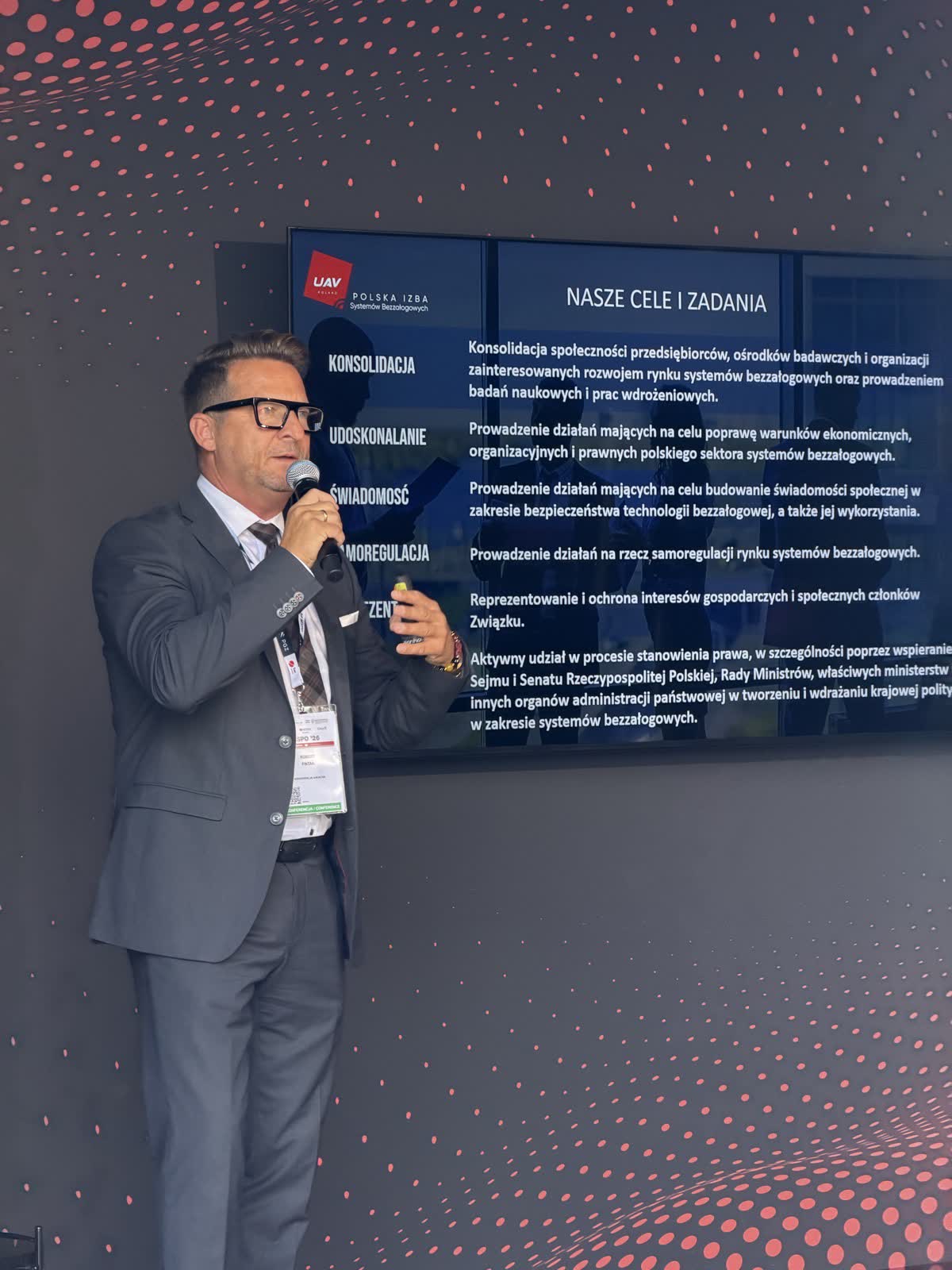
- Polish Chamber of Unmanned Systems. I listened to a talk by Robert Fintak, the Chamber's president, on where the Chamber wants to take Poland's unmanned-systems industry: consolidation, better regulation, self-regulation, and a stronger voice in Warsaw. We had met in Taipei in August, and the Chamber is the natural counterpart for any Taiwanese association looking for a Polish partner.
- Polish drone OEMs and integrators. Falcon Drones, Dilectro, and others. The integrators are the most immediate customers for Taiwanese components: motors, ESCs, cameras, datalinks, batteries and chargers. One asked me on the spot for a spreadsheet of what Taiwan can supply. That spreadsheet is now being built.
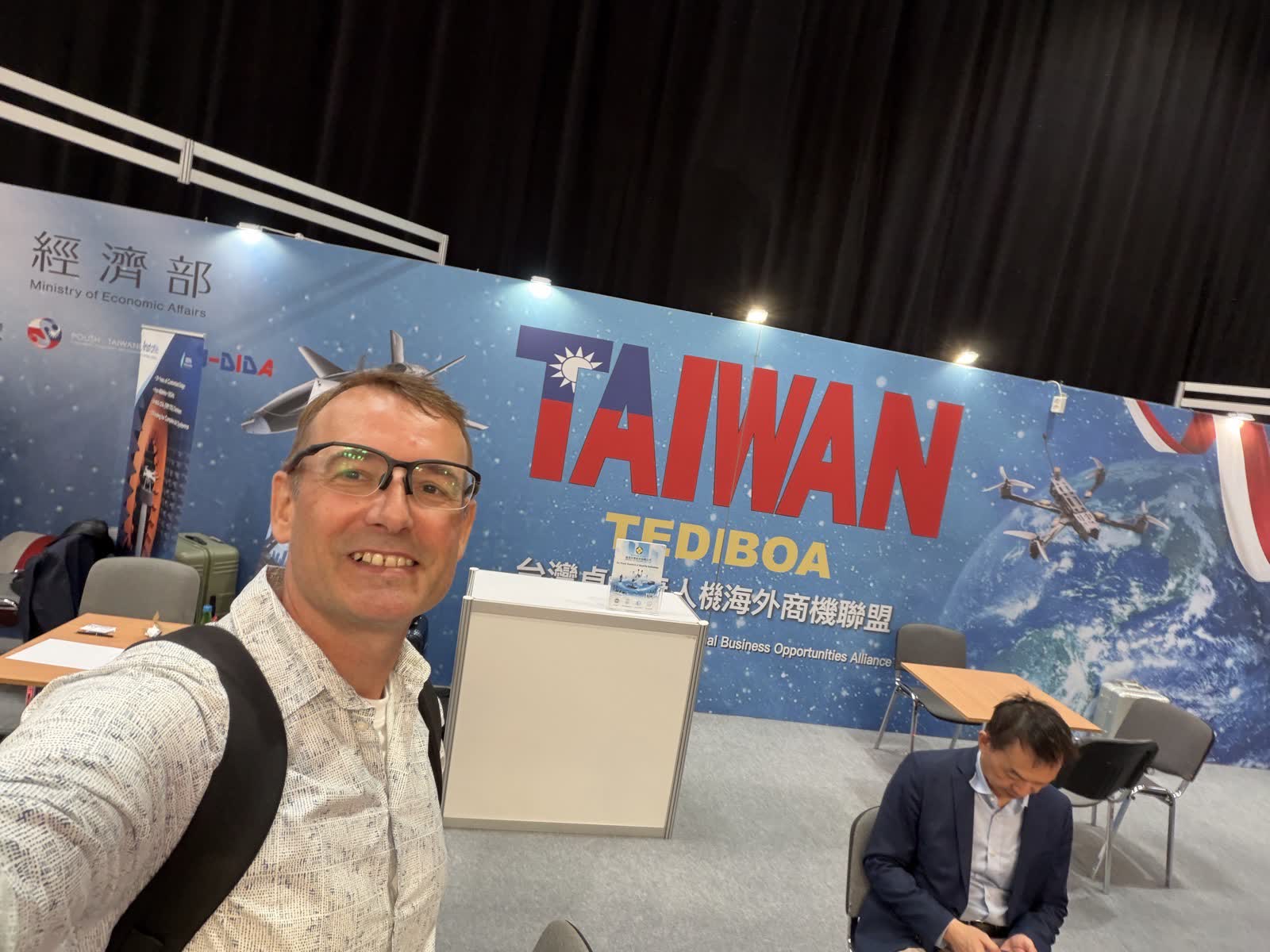
- The Taiwan pavilion. I stopped by the Taiwan booth, organised by the Ministry of Economic Affairs and TEDIBOA, met a few companies I have not worked with yet and exchanged business cards. Perhaps something for the future.
- Beyond drones. Lubawa on camouflage and masking materials, where the hot topic is whether AI can detect your camo from a drone feed. Comazo on protective textiles. MKU on body armour, in the context of a Taiwan tender. And a Canadian defence trade specialist I met on the shuttle bus from the car park, which turned into one of the better conversations of the week.
- Prospects walked, not yet met. I visited the stands of most of the primes and the larger OEMs on my list: WB Group, Quantum-Systems, Helsing, Destinus, Auterion, UkrSpecSystems, Fire Point and the Ukrainian pavilion. Follow-ups are going out this month.
And the rest of the show
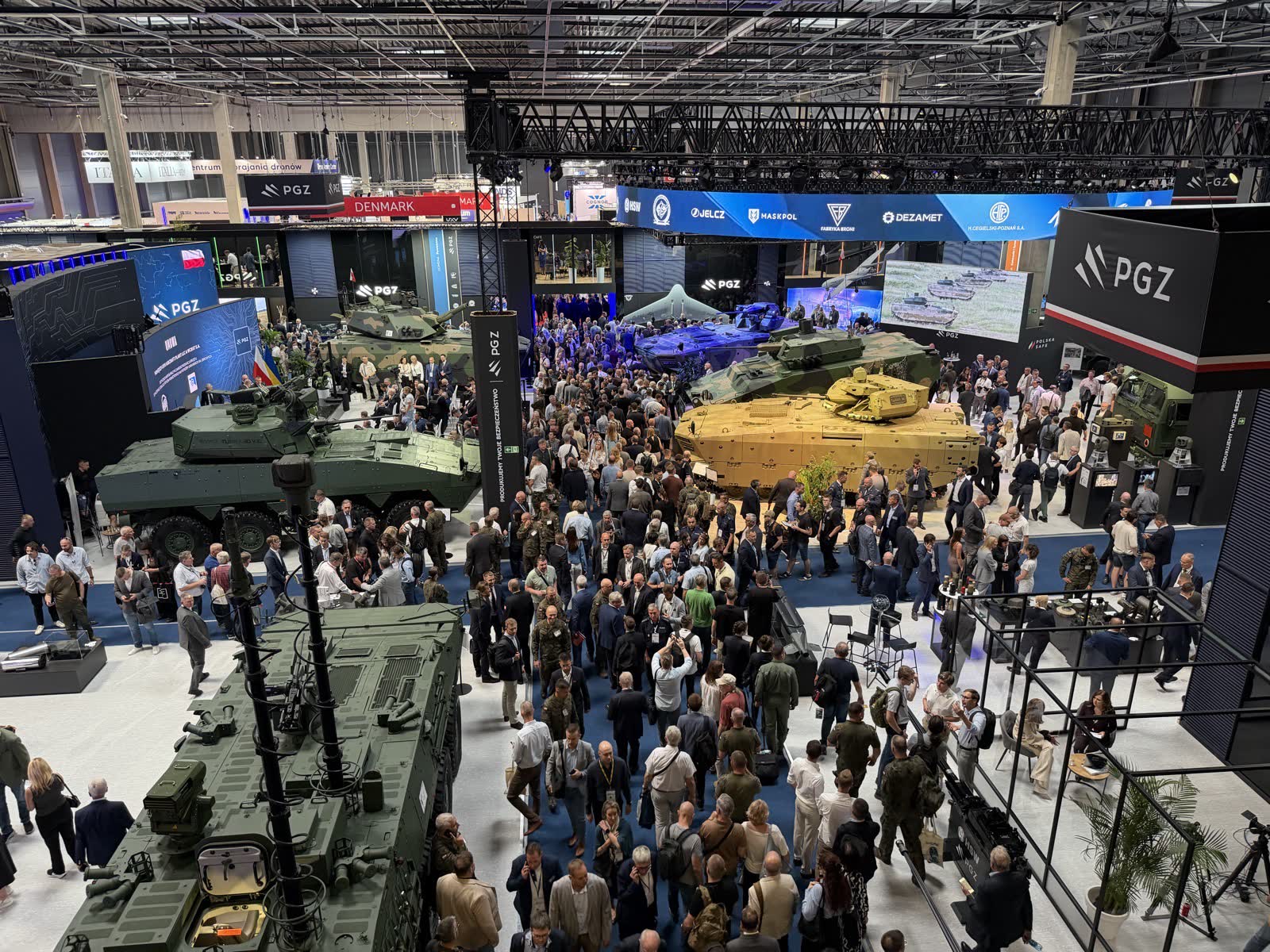
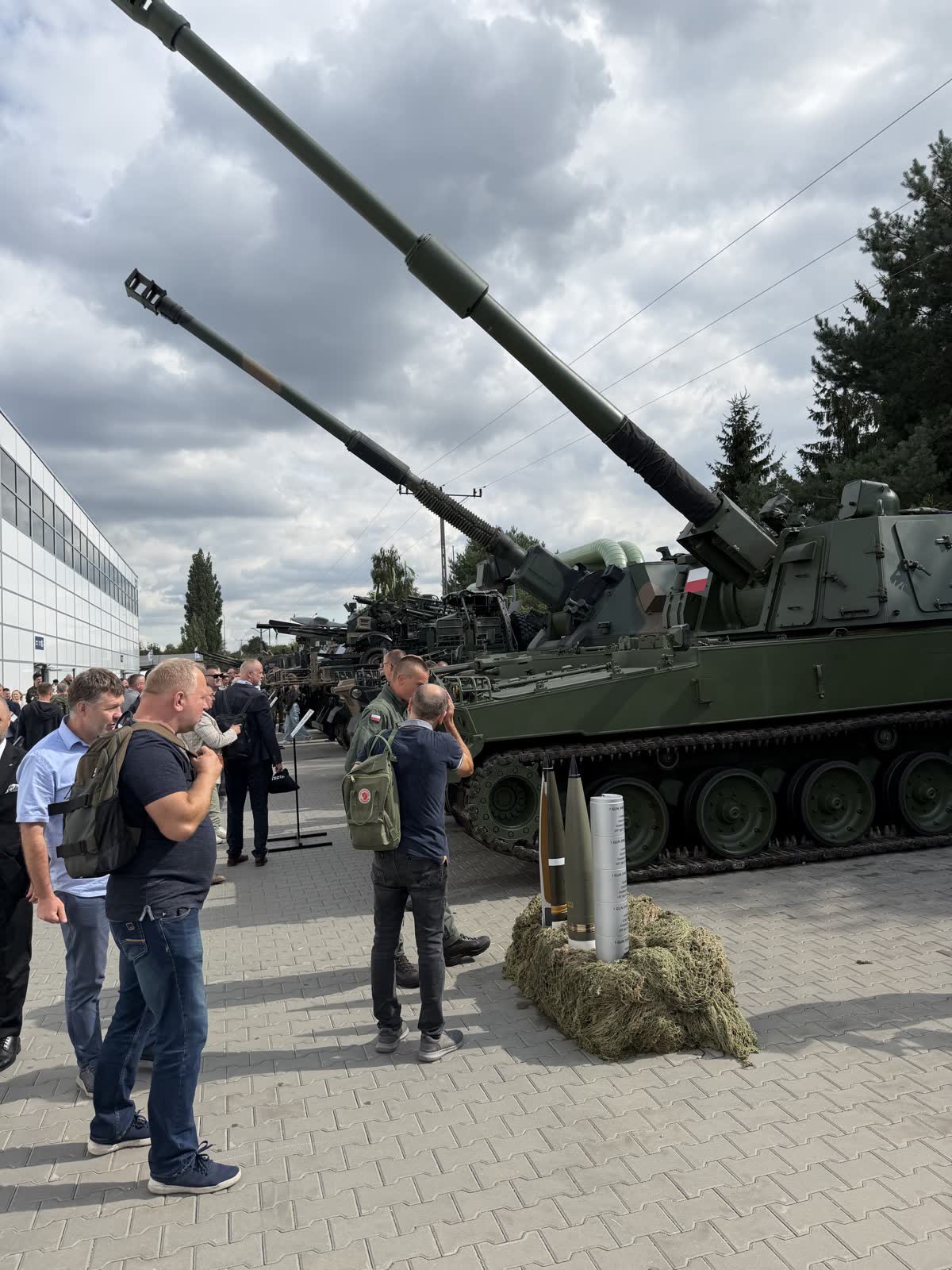
MSPO is still, at heart, a heavy-metal show. Artillery, armour, trucks and soldier kit filled the outdoor areas and most of the big halls. A few frames for context.
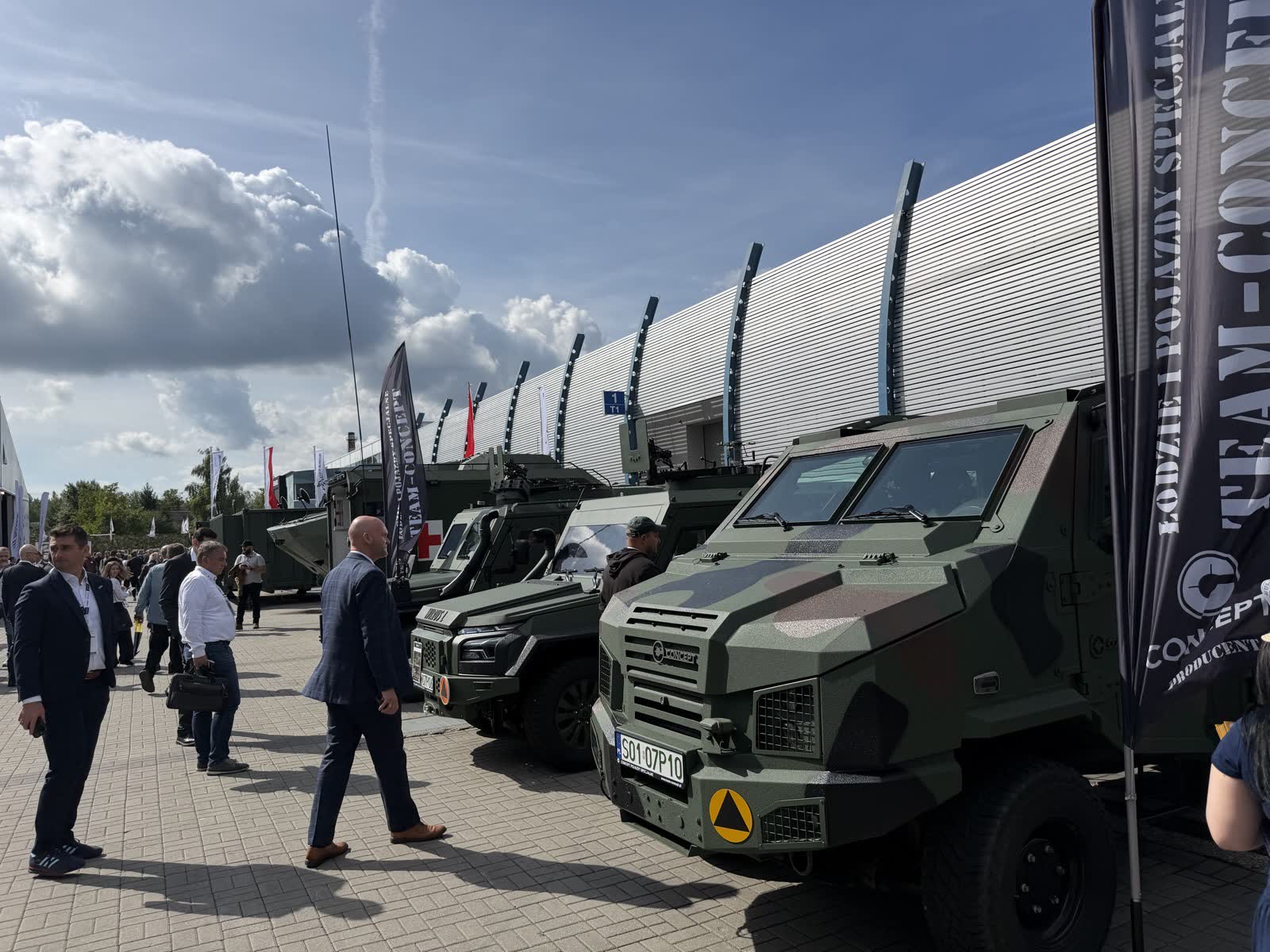
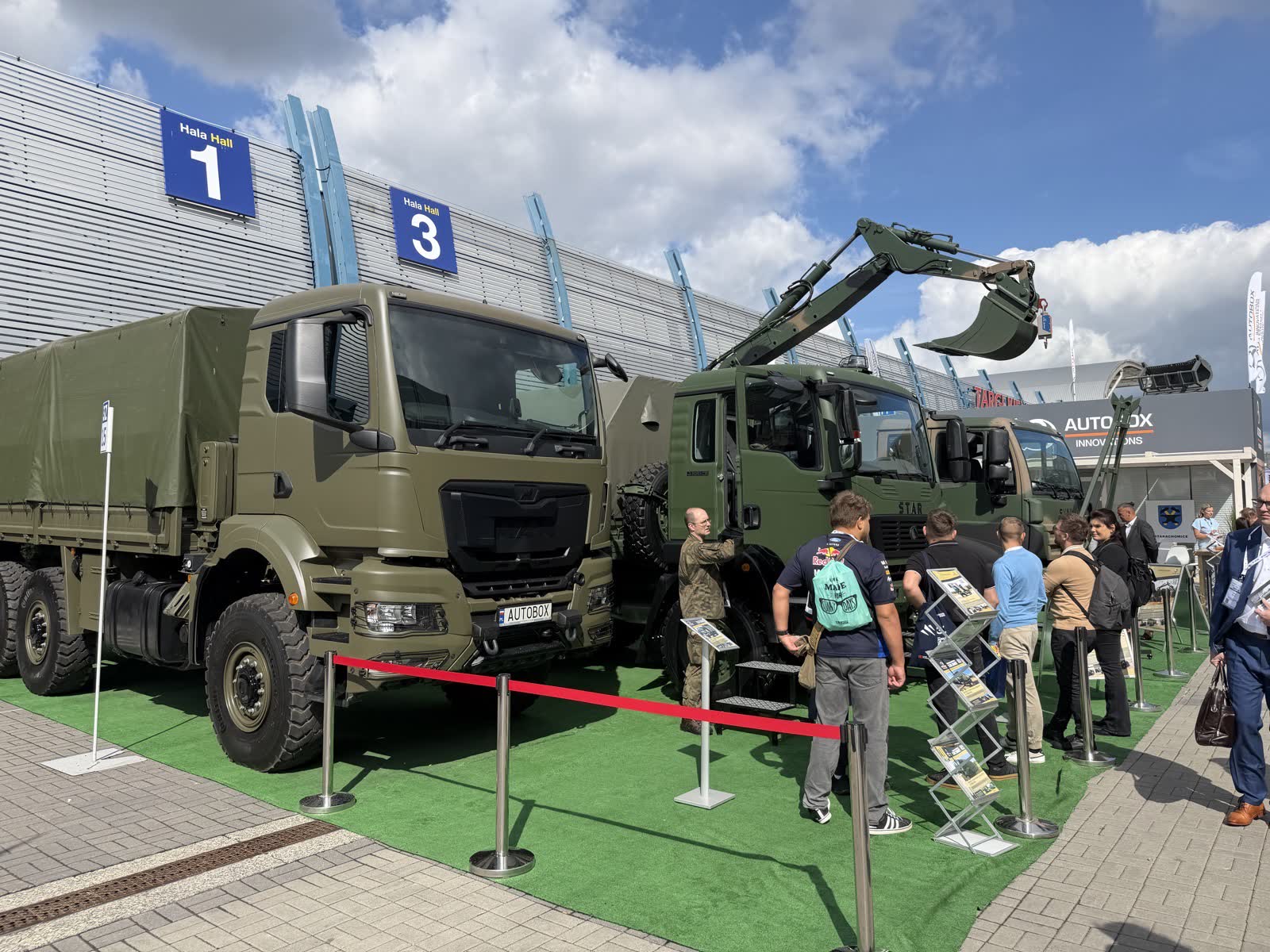
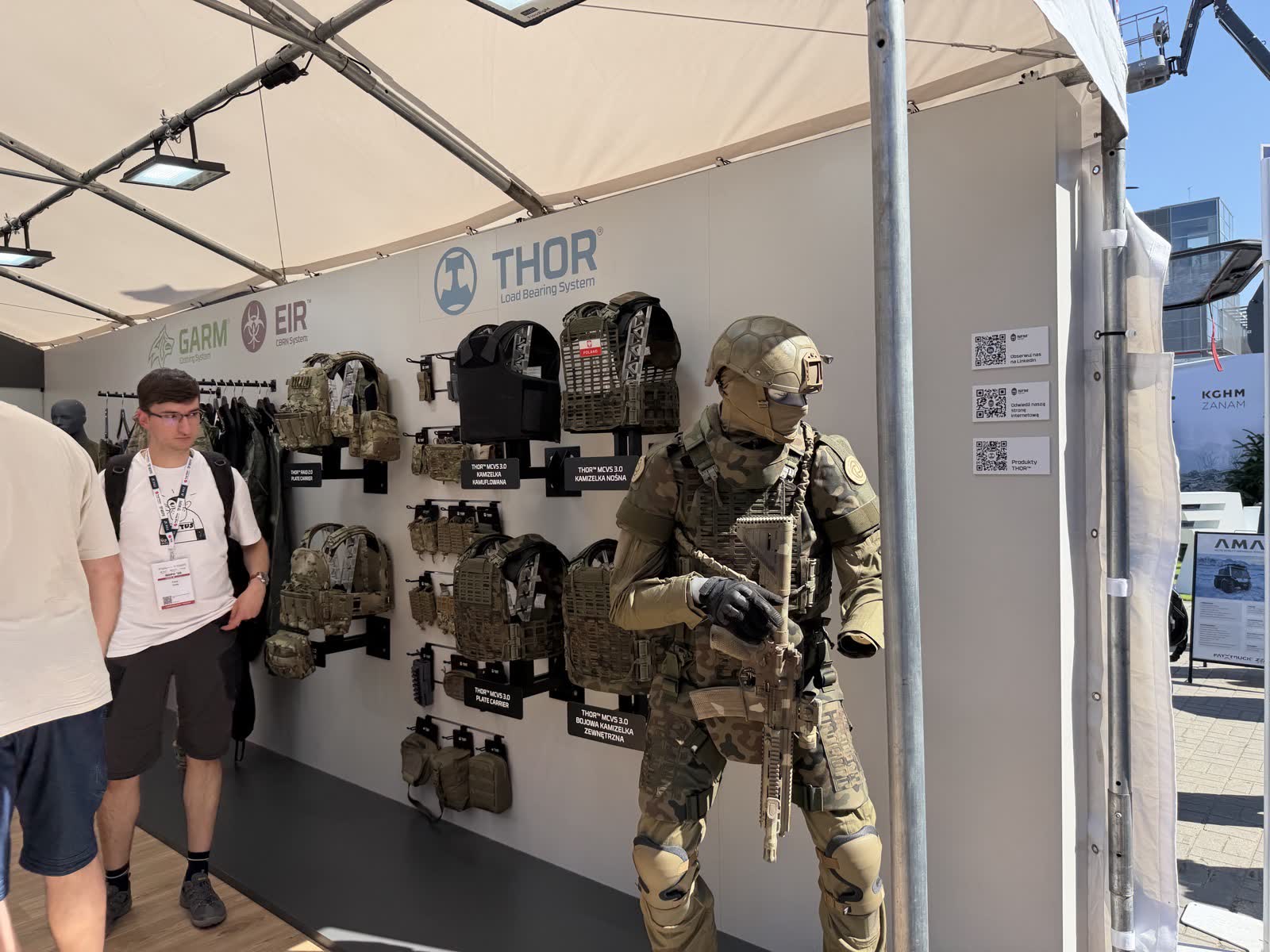
Part 3. MSPO 2026 in the press: a quick summary
- Record edition. 1,209 exhibitors from 43 countries, 45,000 visitors, 900 accredited journalists, 58 official delegations. Exhibition space sold out two months before opening, and a new 15,500 m² hall was added to cope. European Security & Defence · MILMAG · Targi Kielce (official)
- Canada as Lead Nation. The first non-European lead nation in MSPO history, with a delegation of around 250 companies and organisations, timed with Canada's entry into the EU's SAFE defence financing programme. Defense Express
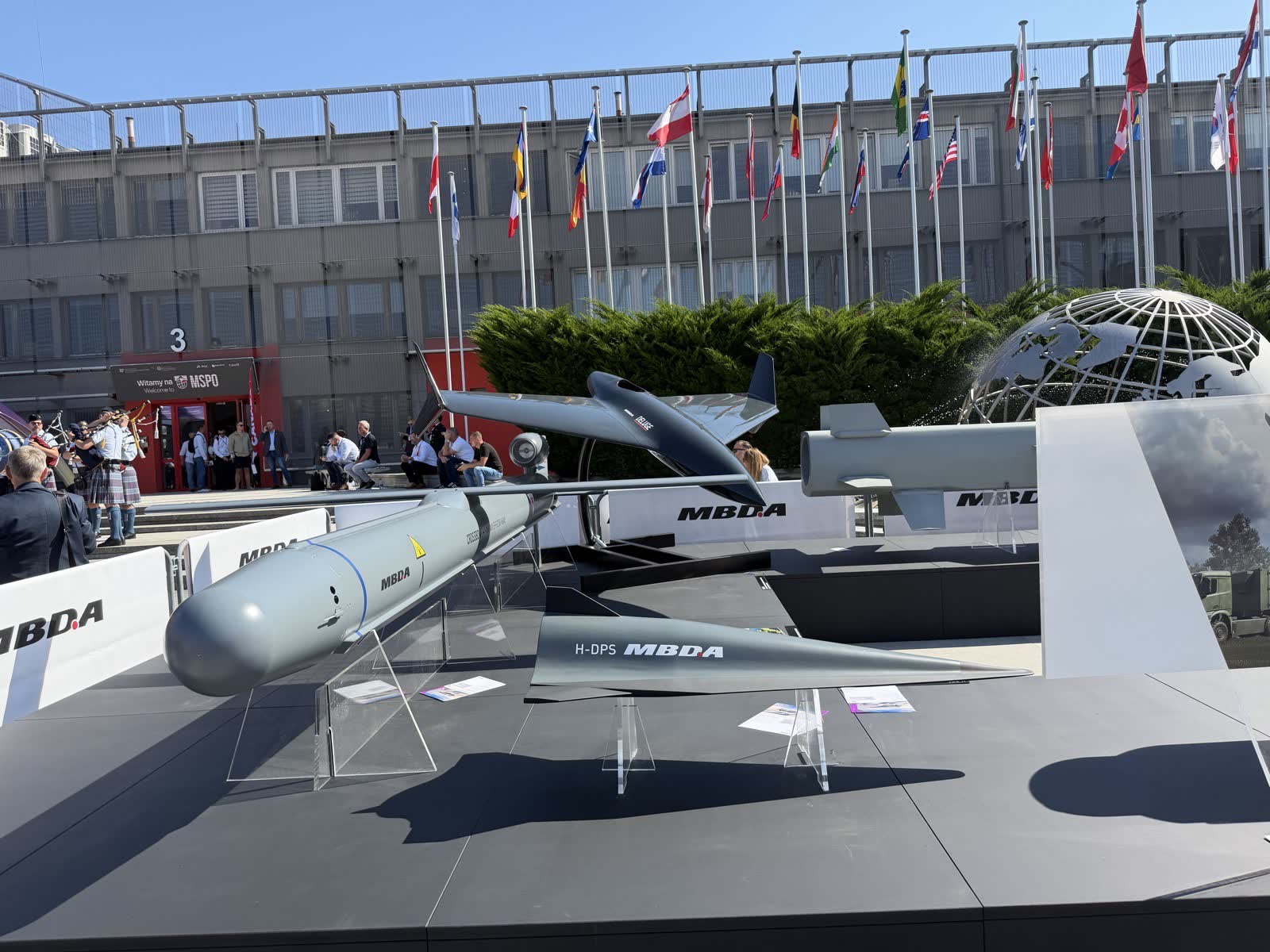
- Drones and counter-drones dominated. WB Group unveiled the WARMATE 8X and jet-powered WARMATE 30 loitering munitions and the GLADIUS 2 stealth jet unmanned system. MBDA and Poland's WITU showed the Counter Mass Interceptor, a low-cost missile for mass drone attacks. Poland's PGZ presented the first complete SAN counter-drone firing platoon. Origin Robotics (Latvia) brought the BLAZE interceptor with a Polish warhead. Quwa
- Ukraine's interceptor race. More than 25 Ukrainian companies exhibited. Defense News reported Ukrainian makers rushing jet-powered interceptors to the field because Russia now uses almost exclusively jet Shaheds against Kyiv. Defense News · United24 Media
- Korea. Hanwha Aerospace and Hanwha Systems exhibited jointly on a 274 m² stand with layered air defence, lasers and unmanned systems. Airbility used MSPO for the European debut of its counter-UAS interceptor line. Hanwha · Defence Blog · sUAS News
- Contracts and premieres. A PLN 3 billion order for PIORUN man-portable air defence, around 70 industrial cooperation agreements, and PGZ's 40-tonne Niedźwiedź heavy IFV demonstrator. The President's award went to the P-18PL early-warning radar. Joint Forces News · Army Recognition
- Taiwan and Poland, the bigger picture. Taiwan's TEDIBOA drone alliance now has over 260 member companies and cooperation MOUs with Poland, Ukraine, the Baltics and others, and Taiwan and Poland signed a drone-industry MOU in December 2025 aimed at a non-China supply chain. The Diplomat · Focus Taiwan · TEDIBOA
What next
Brainiak Consulting is a Taipei-based bridge between Taiwan's manufacturers and buyers in Poland and the wider EU. If you are a Taiwanese drone or component maker who wants a realistic read on what Polish distributors will actually buy, or a Polish integrator who needs a non-China source you can trust and a person on the ground in Taiwan, write to me. Our drone-corridor work lives at taiwandronetech.com. The Taiwan supplier shortlist promised at MSPO goes out to distributors in October.
Tomasz
Brainiak Consulting · Taipei